6.02.2014

Musician Monday: Yo La Tengo

Hey everyone! It's been a while since I posted on here because of Memorial Day and work being more of a full-time job than a part-time one. As it appears that my schedule won't be relenting any time soon, my posts during the summer might be more infrequent. Do not fret! I will post as much as I have the energy to write, so posts will keep coming. Anyway, on to today's musician. Today I'd like to bring to light a slightly older band, having started in the mid 80s. They've had a long and relatively successful career for the last couple decades, and they produced new content as recent as 5 or 6 years ago. Unfortunately for them, they did not receive as much recognition as they deserve, so that's why I'm talking about them today. I am talking about Yo La Tengo.


Spanish for "I have it!", Yo La Tengo is an indie rock trio out of the best state in the US (Jersey obviously) that brings a laid back approach to the very broad indie genre. Their songs are calm and relaxed; I used them to survive my first round of finals because they kept me calm when all hope seemed lost. Every track evokes the classic feel-good emotions that allow the listener to just sit and enjoy the tunes. The members are quite versatile musically as well. Each member contributes to the vocals as well as plays at least two instruments while performing as Yo La Tengo. This allows them to effectively customize each song to have the optimal instrumentation. As stated before, Yo La Tengo never made it to the mainstream despite decades of quality music. Despite this fact, they still enjoy many fans that still support their talents. Here are my picks for this week:

Autumn Sweater (5:18)


Autumn Sweater was the very first song that I heard by Yo La Tengo. It came on while I was listening to Air radio on Pandora (I now am personally against Pandora, more on that later) and I absolutely loved how awesome I felt while listening. The organ mixes well with the awesome drumming and simple vocals to create a true masterpiece.

Leaving Home (2:47)


This instrumental piece is the pinnacle of chill music. It isn't busy and it features a soft, warm guitar lead. The general volume of the piece is quiet and it's got a wandering, dreamy tempo. To me, this is the ideal song to listen to to help you fall asleep. It's quite relaxing.

I'll Be Around (4:47)


This is my favorite Yo La Tengo song by far. It also is the sole reason I didn't blow my brains out while trying to study for both of my Physics finals this year. The full, yet calm background cradles the short verses of lyrics. While brief, these lyrics hold a lot of power in them. To me, this song is saying to the audience, I will always be there for you. Don't worry about your troubles in life, because I will be there for you. I strongly advise you to put everything down for a few minutes, clear your mind, and listen to this track in full. You won't regret it.

What do you think of Yo La Tengo? What other awesome bands don't get the recognition they deserve? Let me know you opinions in the comments, and have a relaxed week.

5.19.2014

Musician Monday: Datarock

Hey everyone! Welcome back to Musician Monday, that special time of the week where some awesome bands' sound waves enter your ears. This week we are going international with a Norwegian group that started off in the year 2000. Filled with fast tempo and electronic style, they are upbeat and always drive the energy in the room through the roof. This high energy and their poppish sounds are the perfect background for your next weird Euro dance party. Of course, I'm talking about Datarock.

Datarock's big appeal comes from two major sources, their physical style and their sound. First the style. As seen from above, they look like your stereotypical international hit artists. They dress weird (all in tight red jumpsuits) and act even weirder. Their music videos are super artsy and they come across as too cool for the public. Under this facade is a wacky group of musicians that don't care what people think of them. To me, they are an example of the ultimate bad-asses in this way. Next is their music. Their songwriting is hilarious. All of the songs are super quirky, and a lot of them reference random things like falling in love at computer camp or Maybelline. Backing these often shouted vocals is an even better instrumental section. Featuring heavy synth, the backing is very electronic and evokes the stereotypical European funky pop that you'd expect out of these guys. All in all, Datarock is a group that looks exactly how they should sound, and then they sound even better. Here are some of their songs:

Computer Camp Love (3:08)


Combining a hilarious music video with an even more hilarious story, Computer Camp Love is exactly what I'm talking about when it comes to wacky song lyrics. Despite the weirdness, the song has an awesome beat that catch your attention and won't leave your head for the day.

True Stories (2:50)


This next track off of their second album shows off Datarock's groovy side. It feature's a moving beat and yet another weird and awesome music video. The lyrics sound like they make sense when you listen to them, but look at the actual lyrics and they really say nothing. The whole sound is through their delivery and melodies behind it. One could argue the song is just a reference to older music and its influence as well.

Laurie (4:25)


Lastly, here's my favorite Datarock song. Laurie is full of feel-good sound with its calm, steady melody and upward, driving baseline. Other than that, I don't have much to comment. It's pretty simple otherwise; just give it a listen and enjoy it.

That concludes this brief segment on Datarock. In other news, I still haven't gotten off of my lazy butt to finish up and publish the Spotify article's conclusion, but it's coming. One day when I'm not too tired from work to actually do something valuable I'll put it together and put it up. Until then, let me know what you think of Datarock and of anyone else who you think deserves a mention on here. 

5.12.2014

Musician Monday: Danger Mouse

Hey everyone, it's your favorite 500 or so words you read every week; Musician Monday! It's finally summer time, and with that I want to talk about one of the musicians I hold in high regard. Many may not know his name because instead of taking center stage, he prefers to have a role more in the background. Behind many famous artists like Cee Lo Green, Beck, The Black Keys, and James Mercer, this man has provided a lot of the catchy beats that you have grown to know and love over this past decade. Of course, I'm talking about Brian Burton, or by his stage name, Danger Mouse.


Danger Mouse is a talented individual, playing guitar, base, keyboard, drums, organ, and synth in varying amounts in each of his collaborations. As stated before, Danger Mouse is not known as a solo artist. Every big project he has produced or been a part of has been in collaboration or a remix of other content. Gaining his first popularity by creating The Grey Album, a full album mash-up of Jay-Z's "The Black Album" and The Beatles' "The White Album", Danger Mouse was after asked to produce with the Gorillaz to create Demon Days. Mouse then formed Gnarls Barkley with now solo artist Cee Lo Green. Being the brains behind the beats of such hits like "Crazy" and "Goin On" in this duo brought them to the top of the charts. After the two split, Mouse then helped produce Beck's Modern Guilt. In a more recent duo, Mouse has been working with James Mercer in one of my favorite groups, Broken Bells (in fact in my Top 10 Artists of All Time and Space). He also created an album with Sparklehorse called Dark Was the Night and an album called Rome with many different lead artists, including Norah Jones and Jack White. Clearly Danger Mouse has done so much for recent music; let's take a look at some of his best stuff:

Going On (2:54)


From Gnarls Barkley's album Odd Couple, "Going On" is my favorite song by the duo. It's so upbeat and got such a great beat, I can't help but want to stop everything I'm doing and start dancing when I hear it. Combining Green's awesome voice and Mouse's amazing instrumentals and production, Gnarls Barkley challenges the likes of The White Stripes and The Black Keys for best duo of the new millennium.

Black (3:32)


Featured in the fourth season finale of hit show Breaking Bad, Black is a song that evokes such a relieved emotion from the audience that a great weight has been lifted. This song comes from the album Rome that Danger Mouse produced with Daniele Luppi, and it's my favorite on the album.

The Ghost Inside (3:18)


While he was in the Broken Bells duo, I first discovered Danger Mouse as his own separate entity from Gnarls Barkley, and this was the song I first heard (shoutout to Jess for showing me this awesome track). Both Mercer and Mouse kill it on this track, making in my favorite until their recent album with "After the Disco" as shown in my Top 10 article.

As can be seen, Danger Mouse has been in the background of many of this decades awesome and iconic indie songs. Where else do you think we'll see him in the future? Let me know in the comments and let me know your opinion on his work. Stay tuned for later in the week when I release the final part of my Spotify article as well!

5.07.2014

Spotify: the Future of Music or the End? Pt 2

Missed out on Part 1? Click here to start from the beginning!

"Making Money"

Spotify also argues that music artists receive a fair share for their music when partnered with Spotify, making the artist more successful and profitable by making a contract with them. They claim that through Spotify’s financial system, artists can and do make a profit through putting their music onto the Spotify client. According to the Artists informational section on the Spotify website, Spotify takes their monthly revenue, and splits it accordingly to each artist based on the artist’s ratio of song streams to total Spotify song streams. Then, Spotify takes their cut of the money, about thirty percent, leaving approximately seventy percent of all revenue generated by Spotify paid to the rights holders of all of the songs on Spotify. Finally, the right’s holders of the music distribute the royalties based on their own contracts with the artists. This means that if an artist publishes independently, they get to keep the full seventy percent of the revenue. Spotify also published figures giving sample earnings of albums over a month, ranging from a “Niche Indie Album” raising a measly $3,300 to a “Global Hit Album” cashing in a hefty $425,000. Through this explanation and these figures, Spotify provides a sound looking case for artists to switch to Spotify as their main revenue generator. This data is a trap, however.

A graph taken straight from the Spotify website.

What Artists Really Make

Although Spotify spins their data to show them helping artists generate profit, the application makes the artists very little money. First, while the rights holders of the songs receive their seventy percent of the songs’ revenue, not every rights holder is the artist themselves. Many artists have contracts with music labels where the artists are bound by contracts to receive only a small portion of actual royalties compared to the revenue their music generate. While a major portion of the money taken from artists for their music is the record companies, Spotify’s policies do nothing to address this issue. Because Spotify then also takes its own cut of the songs’ revenues, musicians are now making even less money than before the dawn of the music streaming era. When broken down to revenue per play, most artists generate between $0.004611 and $0.0084 for every song play on Spotify. This may look like it can add up to great sums for global hit songs, but those songs are the one percent of the musicians of the world. According to Damon Krukowski, lead singer of Galaxie 500 and Damon & Naomi, music streaming pays artists terribly: “Galaxie 500's "Tugboat", for example, was played 7,800 times on Pandora that quarter, for which its three songwriters were paid a collective total of 21 cents, or seven cents each. Spotify pays better: For the 5,960 times "Tugboat" was played there, Galaxie 500's songwriters went collectively into triple digits: $1.05 (35 cents each).” These real statistics just go to show that artists struggle to earn revenue through streaming services. With these calculations, the profit from 47,680 streams on Spotify is equal to one record sale.

Galaxie 500

It Gets Worse

Even scarier, Galaxie 500 is independently produced. Had Galaxie 500 been signed to a label, they would have made almost virtually no profit from putting their content on Spotify, leaving Spotify and the record company with all of the actual profits. Now, a year and a half after Krukowski’s article was posted on Pitchfork, Galaxie 500’s “Tugboat” has 439,780 plays on Spotify and is their most played song by almost double of the next highest, “Strange” having roughly 240,000 plays. This means through Spotify, “Tugboat” has generated the profit of less than ten record sales. Considering these views have accumulated over about two years, there is no way Galaxie 500 can achieve a financial gain through Spotify. Some artists cannot even afford to put their music on Spotify. According to Sasha Frere-Jones, former member of Ui, a funk band from the 1990s, recounts how his music did not even survive on Spotify: “My band, Ui, released a clutch of records through Southern Records. These albums are no longer available on Spotify because, according to Southern, the costs of administrating the relationship were not covered by the microscopic amount of revenue generated.” When someone like Frere-Jones can’t even keep records on Spotify because the transaction costs of the contract with Spotify and Southern Records exceed the revenue the songs generate on the application, there is clear evidence that the business model is completely taking advantage of artists.

Frere-Jones

With that, I'll leave you lovely readers. Join me next time when I conclude this article with some final remarks, what you can do to help, and a couple of links to more articles where you can read on about music streaming if you are interested. 

5.05.2014

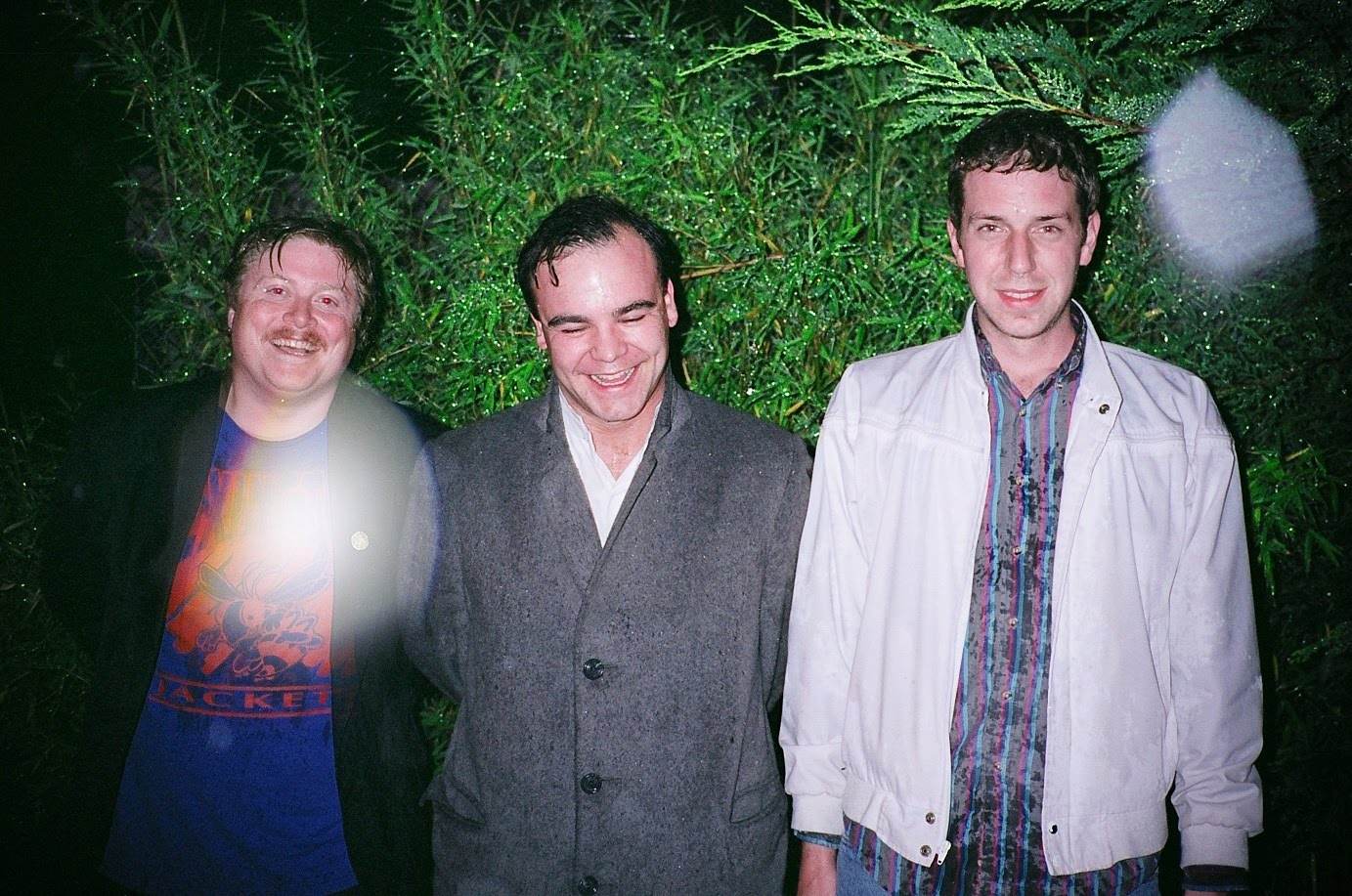
Musician Monday: Future Islands

Hey everyone! My life as a college freshman is officially over as of last night at 9:30, so now I get to be a real person again! With that, I'm getting back into the swing of things, including one of my favorite parts of the week, Musician Monday. This week I'm going to feature a band that I discovered recently. At first I wasn't that excited about them; they seemed weird and too quirky for my tastes. The singer does not sound like your average indie vocalist, and I didn't think I would enjoy their overall sound either. Thank God I was terribly wrong. They soon grew on me and now are a staple in my current listening sessions. I'm talking about the ever fantastic Future Islands.


This Maryland-based trio takes an attack at the ever-growing indie-pop genre with a whole new angle. By pumping even more synth-based rhythms, a rocking bass line, and a unique voice that grows on you as you listen, Future Islands evokes the original synth pop-rock of the 80s in great fashion. Of these three, the voice of singer/songwriter Sam Herring definitely make the most impact on the band's sound. He sounds like the old pop singers from the 80s, and while at first it was weird to hear again, I absolutely love it now. The lyrics Herring writes are also very cool and well thought out. Song topics range from the ever present theme of love to a song remembering his passed grandfather. While Future Islands has the structure to be similar to an 80s pop band, the general tone of the band is a lot more somber, making their tracks more suitable for hanging out and relaxing than getting pumped for a party. Future Islands currently has four full albums published under various label names, with the latest being Singles, released this March. Singles is definitely my favorite album of the four, so it will definitely secure a seat in my Top Ten Albums of 2014, when I compile that list at the end of the year. Here are some of my favorite songs by them.

Seasons (Waiting On You) (3:46)


As shown on their TV-debut on Letterman, Seasons is their most popular song currently. It takes that 80s style to the max as Herring grooves and dances around. What I like the most about this video is it showcases his awesome singing and shows his talent. He sounds almost the same live as recorded, and I deeply respect that.

Doves (3:28)


The first song I heard by Future Islands also happens to be my favorite. Doves exemplifies what drew me to the band; the catchy synth harmonies, the awesome bass line, and of course Herrings awesome vocals. When he hits those high notes in the bridge, it gives me chills.

The Great Fire (3:15)


The Great Fire shows the more somber side of Future Islands. They bring in the fantastic vocals of Jenn Wasner of Wye Oak to mesh with Herrings vocals to add extra effect of their somber tone. Combined with the awesome instrumental backing, Future Islands created a very quality track to be heard and appreciated.

To me, Future Islands taught me to always give new music a second chance. Had I just glossed over them, only hearing their uniqueness as weird, I would have one less awesome band to listen to today. Keep that in mind when you find new music. If it really is new to you, it shouldn't just be a carbon copy of the music you already like. New music should bring exactly what it describes in its title: something new, something different. If you can't look past the differences, then what's the point of even trying to find new music? Let me know what you think in the comments.

4.29.2014

Spotify: The Future of Music or the End? Pt 1

Hey everyone! It's finals week, so you know what that means! That's right, I yet again don't have any time for being a person. As such, yesterday came and went without a Musician Monday. Since this week I won't have real time to generate brand new content, I'm going to take my final English essay and make it more geared towards the blog. It's coming in a few parts, and tonight is the posting of the first chunk of it.

Imagine a world where you can access any music track you want from one seamless platform. Every artist, every album, and every song is available for listening at your leisure. In this world, you gain unlimited access to every newly released song as soon as it is published. This world is becoming closer and closer to a reality in the advent of Spotify. Spotify is a music streaming application that allows users to play any song on the application without restrictions. They can choose to sit through advertisements every four to six songs while premium members pay a monthly subscription to gain access to higher quality streaming and eschew the ads. Spotify also connects everyone through social networks like Facebook, making music sharing even easier than before Spotify was a force in today’s global society. Such a service seems like a magical wonderland for music appreciators around the globe, and it is. Unfortunately, every fantastic invention comes with a steep cost. For musicians trying to gain popularity and become profitable, Spotify is a nightmare. Streaming services like Spotify take advantage of artists and squelch creativity in the music world by forcing artists to use Spotify to remain relevant or to switch to more unorthodox sales models, ultimately making the music industry even more unprofitable for artists either way.


How Spotify "Helps" Spread Your Band's Name

Spotify’s first big claim is that they help artists by spreading the artists’ music through sponsoring them and having them on their application. They say that artists gain publicity through the application’s many features, including radio stations similar to Pandora and a Discover area of the software that suggests new artists, albums, and songs based on the users’ recently listened tracks. Additionally, through the social media tie-ins featured on Spotify, users can see what their friends have listened to recently. Besides this, Spotify provides additional tools for artists to use to reach out to their audience like share buttons and custom profiles for the application. As Spotify grows, this publicity can only grow for artists that join Spotify and allow their music to be played through the software.


The Problem

This poses a problem for the music community as a whole, as the artists who do not have a contract with Spotify will lack publicity as Spotify grows, essentially forcing artists to sign onto Spotify’s agreement to stay relevant. Once users join Spotify and begin delving into the millions of songs on the software, they have little reason to leave the application for any other music. Since they have such a large collection at their fingertips, users do not need to look elsewhere for quality music. Also, since users have unlimited access to streaming their favorite music, they have no incentive to actually pay for any more music, either from online downloads from iTunes or Amazon or through physical discs. David Byrne, lead singer of Talking Heads who now has a prestigious solo career agrees: “I'd be even more curious if the folks who "discover" music on these services then go on to purchase it. Why would you click and go elsewhere and pay when the free version is sitting right in front of you?” Byrne’s sentiment reinforces the sad truth that bands who are not on Spotify do not get the attention they need to survive and that bands on Spotify don’t actually sell more records for being on Spotify. Some already established artists like Byrne and Thom Yorke have boycotted Spotify to show their disapproval, but they can afford to leave the application because they already have made plenty of money and are established. The ones who suffer because of Spotify’s increasing popularity are the artists trying to get their band off of the ground and spread their name. They can’t afford not to join the Spotify bandwagon, and they are forced into contracts that pay very little from Spotify because of this pressure.


Artists Trying to Cope

Artists who decide not to join Spotify have to switch to more unorthodox business methods that result in much less revenue generation than before the beginning of Spotify to stay relevant. Many artists like Brad Sucks (shown above recording a lovely tune), Radiohead, and Wilco have looked towards a pay-what-you-want strategy, where they provide downloads to their music essentially for free. Those who do not want to pay are not required and those who want to support their favorite artists can do so at their leisure. While most artists generate very little revenue this way, they use this method to spread their name in the music world by giving their audience a free way to experience their music. Any further revenue the music artist generates is from merchandise and concert tickets. The problem with this business method is that it makes very little money for the artist anyway. Artists are now caught choosing the lesser of two evils: contracting with Spotify to spread their name and gaining miniscule amounts of profit or using their own marketing techniques to gain followers with the risk of catching no one’s attention.

In the interest of keeping this to the usual readable length of the blog, I'm splitting this article up into (most likely) three parts. Join me next time when I move away from the marketing side of making a living off of music and talk about the actual dollars and cents (mostly cents in the case of Spotify).

4.21.2014

Musician Monday: Caribou

It's a beautiful Monday, so what better way to kick the week off is some cool new music? This Musician Monday I'm about to showcase a slightly different type of artist than I have before. Back in the middle of high school I was big into cool instrumental music, and naturally I discovered a lot of really cool artists that way. What's so cool about instrumental music is that the artist no longer can use a lot of lyrics as a crutch for the rest of the piece. Well made instrumental songs have a lot of complexity in the instruments that are potentially lost when one eschews normal vocals and lyrics. If there are lyrics in the songs, they are sparing and are there to only enhance the instrumental parts or provide a sound only the human voice can create. In this case the voice becomes its own separate instrument, adding another line to the complexity of the track. Now that I've explained my case for instrumental music, let's introduce one of my favorite artists in this genre: Caribou!


Caribou is a Canadian instrumental artist that takes  instrumental music in a much different direction than current popular genres like EDM, house, trap, etc. Focusing less on the heavy electronics and large bass drops, Caribou brings out the softer, chiller side of instrumental music. Utilizing the usual guitars, bass, drums, and synth, Caribou creates a wide variety of sounds that range of electronic ambiance to weird, trippy instrumental to straight jams with the perfect amount of electronic sound. If I were to picture Caribou as someone related to a more popular artist, I would say he would be Moby's misunderstood younger brother. While the extremes of his style are very eclectic, they make beautiful pieces when mixed masterfully together by Caribou. Just so you don't miss out on all of his great works, note that Caribou also went by Manitoba for a while and now has some works published under the name Daphni. My two favorite times to listen to Caribou are when I need to focus and need some cool background music or when I want to veg out and hear something unique. Here are some of my favorite songs by Caribou.

Sundialling (4:41)


Sundialling is one of my favorite instrumental songs for good reason. It has a great driving beat and it feels like there is actual progression in time while you listen. I always try to listen to this song before an exam or game to get myself positive and in the zone.

Tits & Ass: The Great Canadian Weekend (4:50)


Published under his original name, Tits & Ass: The Great Canadian Weekend is one of my favorite chill instrumental songs. It pivots around a few electronic based chords and good drum beats, and Caribou uses these to make a solid, low-key jam that should be in the background of any good hangout sesh or elevator.

The Barn (4:54)


My favorite song by Caribou, The Barn embraces his straight jam side the most of these three songs. It features some cool weird, background tones to compliment the guitar and bass-lines that form the basis of the song. This was the first song I found by Caribou, and it is one of the songs that got me into this chiller section of the instrumental style of music.

What do you think of Caribou and instrumental music in general? Share in the comments along with any artist you think should get recognition for their awesomeness. Stay tuned in the coming week for another New Sightings and the first of a multi-part series about Spotify, Brad Sucks, and the future of music.